Navigating Family Court UK

Child Arrangements Order (UK Guide):

What It Is, How to Apply (C100) & What Happens If It’s Broken

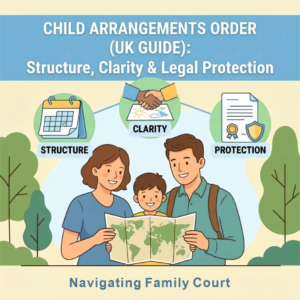
If you are struggling to agree arrangements for your child, a Child Arrangements Order can help bring structure, clarity and legal protection. It is designed to set out clear arrangements about where a child lives, who they spend time with, and how that contact should take place.

These situations often arise during separation or when communication between parents has broken down. It can feel overwhelming, especially when emotions are high and there is no clear agreement in place. A Child Arrangements Order is there to provide stability for the child and remove uncertainty for both parents.

This guide explains everything you need to know in plain English, including what a Child Arrangements Order is, who can apply using a C100, how the process works, how long it takes, and what steps can be taken if the order is not followed.

APPLY ONLINE HERE / DOWNLOAD C100 FORM HERE / MORE FORMS CLICK HERE

What is a Child Arrangements Order?

A Child Arrangements Order is a legal order made under the Children Act 1989.
It decides:

• Who a child lives with

A parent may apply for a Child Arrangements Order to decide who the child lives with when there is disagreement about care arrangements.

This may be because:

  • One parent believes they can provide a more stable home environment
  • There are safeguarding concerns about the other parent
  • There are issues around routine, schooling or consistency

The court may decide that a child lives with one parent, or with both parents under shared care arrangements. Shared care does not always mean an equal split of time, but it does mean both parents remain actively involved in the child’s life.

• Who a child spends time with

A Child Arrangements Order also sets out how and when a child spends time with the other parent.

This may include:

  • Regular weekly contact such as weekends or midweek visits
  • Overnight stays
  • School holiday arrangements
  • Indirect contact such as phone calls or video calls

The court will always make decisions based on what is in the child’s best interests.

What does a Child Arrangements Order do?

A Child Arrangements Order provides:

• A clear and consistent routine

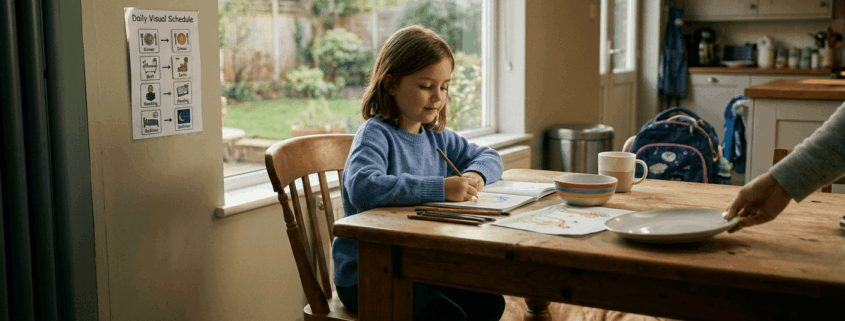
It creates structure so the child knows where they will be and when. This reduces uncertainty and helps provide emotional stability.

• Legal clarity for both parents

It clearly sets out responsibilities and arrangements, reducing misunderstandings and ongoing disputes.

• Protection where there is conflict

If one parent is not following agreed arrangements or is preventing contact, the order can be enforced through the court.
Child Arrangements Order Navigating For Families C100 Form Uk Family Courts

Who can apply for a Child Arrangements Order?

A Child Arrangements Order can be applied for under the Children Act 1989, but the law divides applicants into two groups.

• People who can apply without permission

You can apply directly if you are:

  • A parent of the child
  • A person with parental responsibility
  • A step-parent with parental responsibility
  • A person named in an existing Child Arrangements Order (for example, someone the child lives with)

These applicants can apply using a C100 form.

• People who need permission from the court

You must first ask the court for permission if you are:

  • A Grandparent
  • Aunts, Uncles or other family members
  • A family friend or someone the child has lived with informally

This is called applying for “leave to apply”.

The court will consider: Your relationship with the child, Your involvement in their life, Whether the application may disrupt the child’s stability and Whether the application is in the child’s best interests

If permission is granted, you can then proceed with a full application.

How to apply for a Child Arrangements Order in the UK

To apply, you will need to complete a C100 application form or apply online.

• Attend a MIAM

In most cases, you must attend mediation before applying to court, unless you are exempt. This is to see whether an agreement can be reached without court involvement.

• Complete the C100 form

This sets out what arrangements you are asking the court to make and why.

Submit your application

Once submitted, the family court will issue the application and begin proceedings.

• Safeguarding checks and first hearing

The court will involve CAFCASS to carry out safeguarding checks with the police and social services. A first hearing will then be arranged to explore agreement or next steps.

Official forms for a Child Arrangements Order

You may need:

C100 form

The C100 form is the starting point for most child arrangement cases. It is the official application used to ask the family court to make decisions about a child, such as:

  • Where the child lives
  • Who they spend time with
  • How contact will take place

This form is used under the Children Act 1989 and is required when parents or carers cannot agree arrangements themselves

C1A form

The C1A form is used alongside the C100 when there are concerns about safety, such as domestic abuse or risks to a child.

It allows you to tell the court about issues like:

  • Domestic abuse (physical, emotional, financial, or psychological)
  • Child abuse or neglect
  • Drug or alcohol misuse
  • Threats, violence, or controlling behaviour
  • Risk of abduction

C8 form

The C8 form is used if you need to keep your address or contact details private from the other party for safety reasons.

Key facts:

  • It is commonly used in cases involving domestic abuse or conflict where sharing your address could place you at risk.
  • Your details are still provided to the court but are kept confidential from the other party.
  • It can be submitted alongside your C100 application.

Why it matters:
The court recognises that safety comes first. The C8 form ensures that individuals can still access the legal system without putting themselves or their children at further risk.

How long does a Child Arrangements Order take?

Timescales vary depending on complexity:

Uk Family Courts Child Arrangements Order Navigating For Families on the C100 Form

• Simple cases

Around 2 to 4 months where agreement is likely and there are no safeguarding issues.

• Moderate cases

Around 4 to 8 months where disputes need court involvement.

• Complex cases

6 to 12 months or longer where there are safeguarding concerns or reports required.

Family court cases in the UK can often feel slow, frustrating and unpredictable. While every case is different, there are some clear reasons why delays happen and the data shows this has become a growing issue, especially since COVID-19.

The Backlog of Cases (Still Recovering from COVID-19)

The COVID-19 pandemic had a major impact on the court system. Hearings were delayed, moved online, or cancelled entirely.

  • The family court backlog peaked at around 65,743 cases in 2021 [Source]
  • As of December 2024, there were still 47,662 outstanding cases [Source]
  • Across children cases alone, over 103,000 children were affected by delays in 2023 [Source]

Even though the system is recovering, the backlog has not fully cleared, meaning many families are still waiting longer than they should.

High Volume of Cases (Demand Has Increased)

Family courts are dealing with a significant number of applications every year, and this demand continues to rise.

  • In just one quarter (July–September 2025), there were 67,844 new family court cases started in England and Wales [Source]
  • Private law children cases (like Child Arrangements Orders) increased by 11% in that same period [Source]
  • Some estimates suggest over 1,000 new family cases are filed every working day [Source]

What this means:
Courts are simply handling more cases than they have capacity for, which creates delays before your case is even looked at.

Court Time and Resources

A key issue is that the system is under-resourced.

  • Planned reductions in court sitting days from 2026 are expected to make delays worse [Source]
  • Around 32% of hearings are cancelled or delayed before they even happen [Source]

What this means:
Even when your case is progressing, hearings can be postponed, pushing timelines back further.


Important Notice

The information provided on this website is for general guidance only and does not constitute legal advice. If you require legal advice regarding your individual circumstances, you should seek assistance from a qualified legal professional.